
Original Art vs Prints: Which One Is Right for You?

Most people who are serious about putting art on their walls eventually arrive at this question. You've found something you love. Now you're wondering: does it matter whether I buy the original or a print?
The honest answer is — it depends on you. Not on what sounds more impressive, and not on what an artist would prefer you to buy. It depends on what you actually want from the work, and what role you want art to play in your life.
This guide will help you figure that out.
What's the actual difference?

The obvious answer is that an original is one of a kind and a print is a reproduction. But that distinction matters more in practice than it might sound.
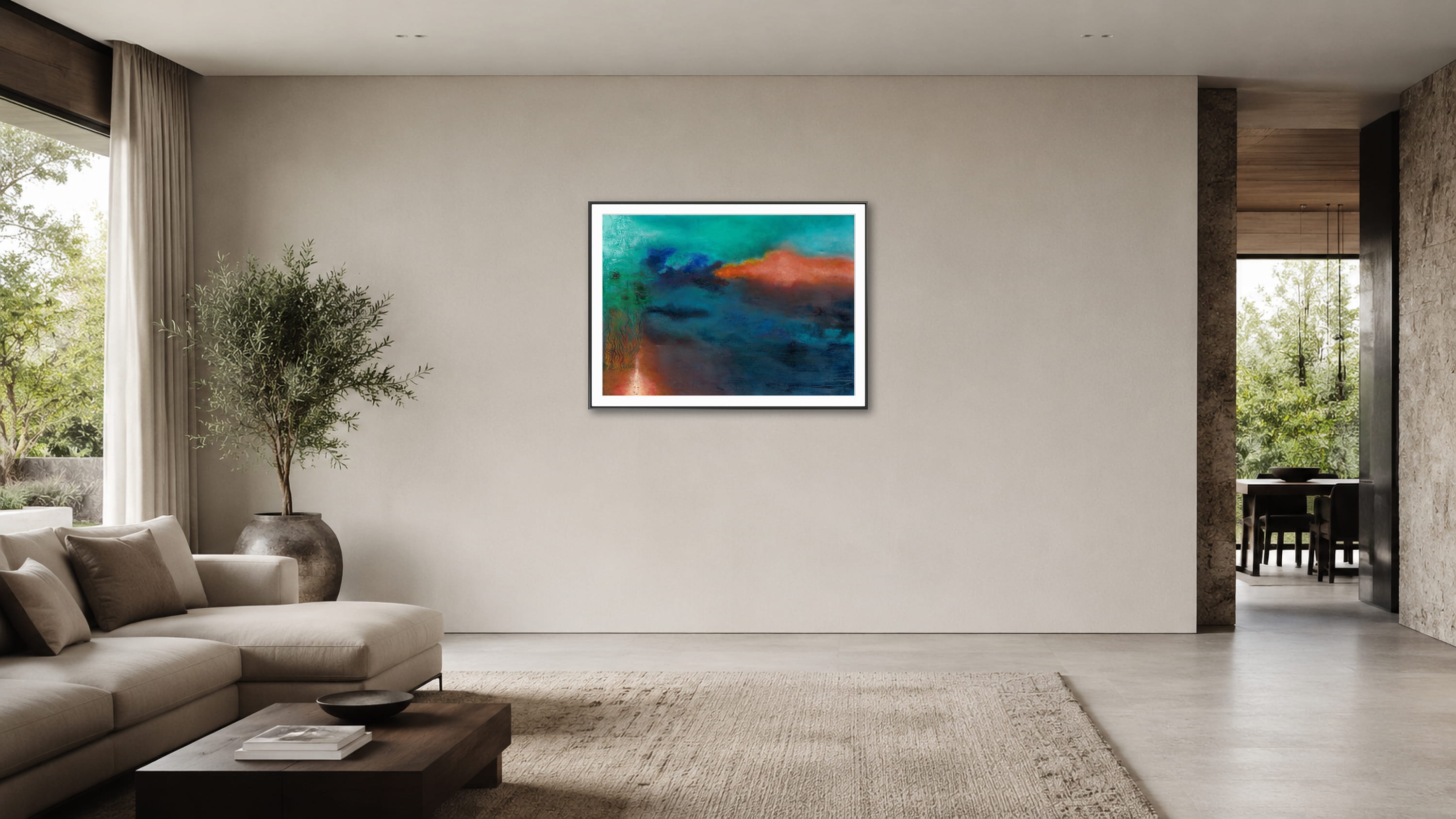
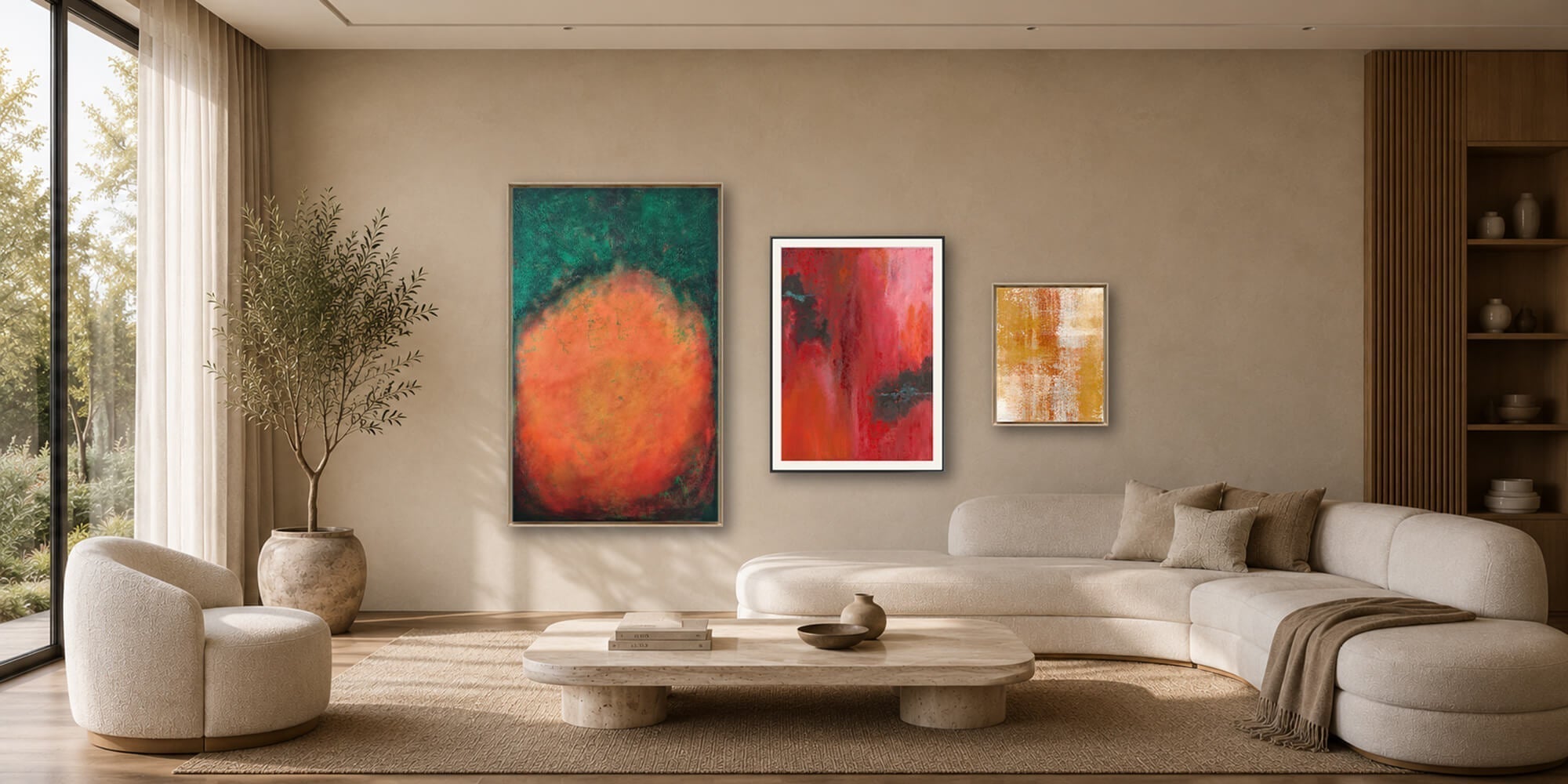
When you buy an original painting, you're buying the physical object the artist made — with their hands, their marks, their decisions. In a mixed media work, you can see and feel layers of material built up over days or weeks. The texture is real. The scale is exactly as the artist intended. There is one of it in the world, and you own it.
A print is a high-quality reproduction of that image, produced digitally and printed onto paper or canvas. The image can be faithful and beautiful. But it is a copy of the original object, not the object itself.
It's worth knowing that prints come in two types: limited editions (a fixed number produced, each numbered) and open editions (no cap on how many are made). Open edition prints are more widely available and typically more affordable. The prints available in this studio are open edition — the focus here is on making the work accessible, not on artificial scarcity.
When a print is the right choice

Prints make a lot of sense in more situations than people realise.
If you're just starting to collect, a print is a lower-risk way to live with a piece of work and understand what you respond to. There's real value in spending six months with an image before you know whether you're drawn to an artist's world. Our beginner's guide to buying your first painting covers this in more detail.
If you're decorating multiple spaces — a home office, a guest room, a corridor — prints let you build a consistent visual language across rooms without the cost of multiple originals.
If you want to give art as a gift and aren't certain of the recipient's taste, a print is a thoughtful option that won't feel like a financial overcommitment.
And if the original you love is already sold, a print means you can still live with that image. That's not a consolation prize — for many collectors, the image is what matters most.
When an original is the right choice

There are things an original offers that no print can replicate.
The most immediate is physical presence. An original painting in a room does something different to the air in that room. The texture catches light differently at different times of day. You notice new things in it over months and years. Art that truly transforms a space almost always works this way — it has a life that reproductions don't quite carry.
Originals also have investment potential that prints don't. As an artist's reputation grows, the value of their original works tends to grow with it. Prints, being reproducible, don't appreciate in the same way. If you're thinking about art as something that holds or grows in value, originals are the only relevant category.
There's also something harder to quantify: the feeling of ownership. Knowing that the exact object on your wall passed through the artist's hands — that the marks you're looking at were made by a specific person on a specific day — changes the relationship between you and the work. Some collectors find that deeply meaningful. Others don't. Neither response is wrong.
What about value — financial and otherwise?
To be direct: originals have appreciation potential. Open edition prints generally don't.
But financial value is only one kind of value. A print you genuinely love, that changes the way a room feels every morning, has real value in your life — even if it won't appear on a balance sheet. Plenty of serious collectors own both originals and prints, and don't feel any contradiction in that.
The mistake is buying a print hoping it will appreciate, or buying an original purely as an investment when you don't actually connect with the work. Neither tends to end well.
A simple framework to help you decide
Ask yourself three questions:
What's my budget? Originals are a significant purchase. If the budget isn't there yet, a print is a genuine option — not a compromise.
What's the intention? If you're furnishing a space, a print works well. If you're building a collection, originals matter more over time.
How important is owning the object itself? Some people feel the difference immediately. Others don't — and that's completely fine. If the image is what moves you, the image is what you should have.

A note from the studio
I make both originals and prints because I believe different people need different things from art — and both are valid. I'd rather someone live with a print of a painting they love than walk away from art entirely because an original felt out of reach.
That said, if you're ever standing in front of an original and something in you responds to it — trust that response. That feeling has a name. It's called collecting.

Leave a comment
This site is protected by hCaptcha and the hCaptcha Privacy Policy and Terms of Service apply.